Each year, scientists from across the Pacific gather in Noumea, New Caledonia, to exchange ideas on the region’s most pressing fisheries issues. Among them this year were Dragonfly Data Science director and fisheries scientist Philipp Neubauer and fisheries scientist Kath Large, attending a pre-assessment workshop hosted by the Secretariat of the Pacific Community (SPC).
Dragonfly has been working with SPC for several years, helping assess the status of shark populations caught as bycatch in tuna fishing operations.
This latest meeting was the third one that Dragonfly has been able to attend in person, providing a chance to present early results, gather feedback, and build regional consensus on upcoming assessments for tuna fisheries (and tuna adjacent species such as sharks) before the projects are formally carried out.
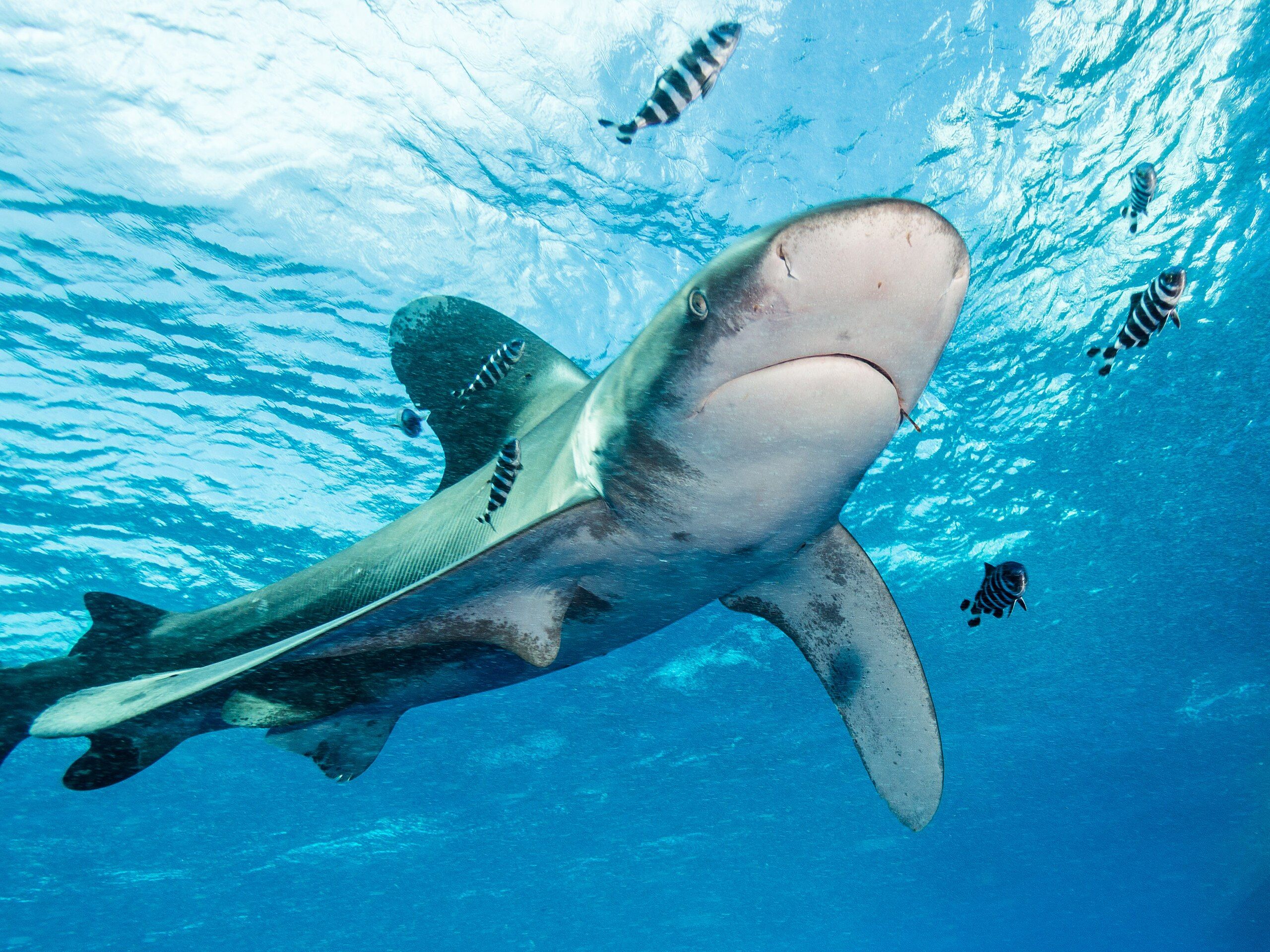
Over the next four months, Philipp and the team are working on a stock assessment on the oceanic whitetip shark species—one of the most heavily-impacted shark species in Pacific Ocean tuna fisheries.
Currently, the species is believed to be hovering at just 3 to 4% of its original abundance.
Nevertheless, preliminary assessments for this project indicate that numbers may have stabilised, or even begun to increase slightly, after decades of decline.
“There’s some tentative evidence that oceanic whitetip sharks might be slowly recovering following management action about a decade ago,” Philipp explains.
“But the dataset is patchy. Before we begin our assessment, we wanted to get regional scientists’ perspectives on what they’re seeing, and why.”
The workshop, while informal, plays an important role in shaping the science that supports Pacific fisheries management. The feedback received will help Dragonfly and SPC finalise their assessment plan, which is due to be presented to the Western and Central Pacific Fisheries Commission’s Scientific Committee (WCPFC) in August 2025.
If endorsed, the updated assessment could mark a turning point in understanding whether non-retention rules and shark protections are beginning to work.
“Sharks play an essential ecological and cultural role in Pacific Ocean ecosystems,” says Neubauer. “Understanding whether conservation measures are having the desired impact is crucial to making sure we’re on the right path.”
More
- Philipp spoke to Radio New Zealand about the workshop. Listen to the interview here:
Get in touch
To talk to Dragonfly about this work, please get in touch with Dr Philipp Neubauer (philipp@dragonfly.co.nz, +64 4 385 9285)
The photo is of an oceanic whitetip shark with a rusted hook in its mouth, CC BY Alexander Vasenin